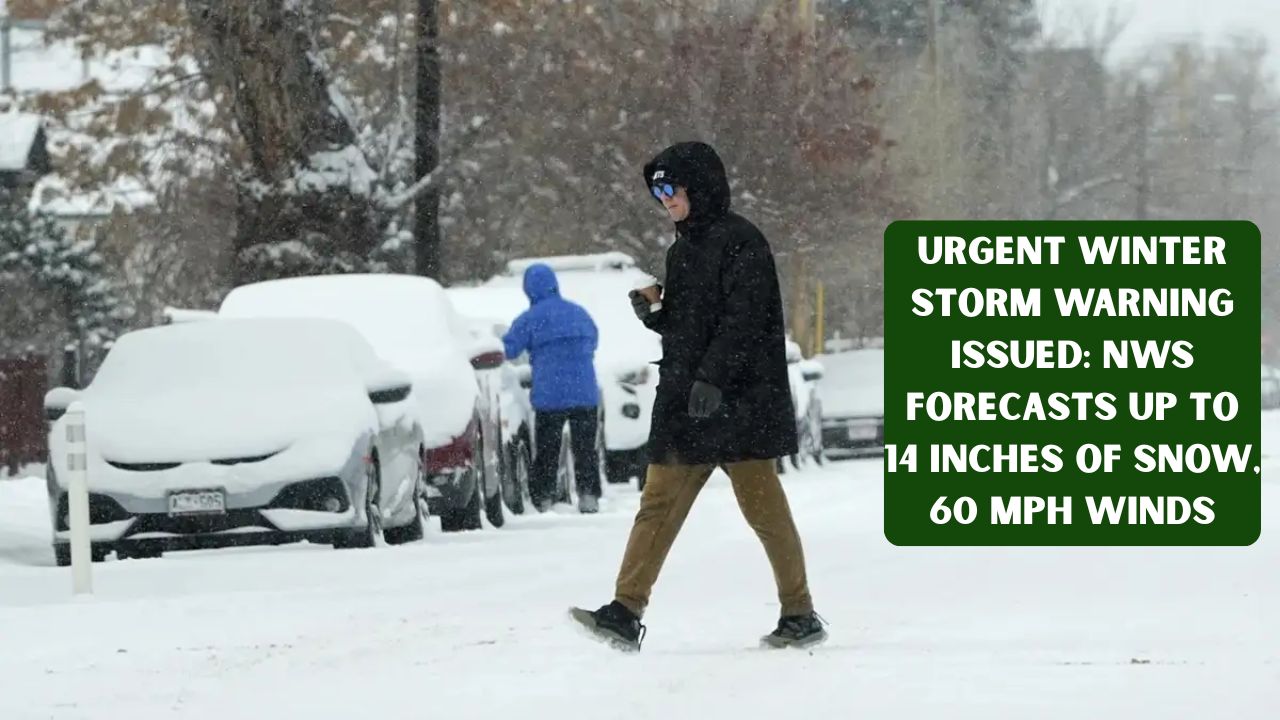
The National Weather Service (NWS) has issued an urgent winter storm warning as a powerful meteorological system begins to sweep across the region.1 Forecasts indicate that some areas could see staggering snowfall accumulations of up to 14 inches, accompanied by punishing wind gusts reaching 60 miles per hour. This combination of heavy precipitation and high-velocity winds is expected to create “whiteout” conditions, making travel nearly impossible in the hardest-hit sectors.2 Meteorologists are tracking the storm’s progression closely, noting that the rapid drop in barometric pressure suggests a potent system capable of disrupting daily life for millions of residents through the weekend.3
Severe Snowfall and Blizzard Conditions Expected
As the cold front collides with lingering moisture, the primary concern for safety officials is the intensity of the snowfall. While many urban centers may see a manageable few inches, higher elevations and specific “snow belts” are in the crosshairs for the maximum 14-inch totals. When these heavy snow rates—sometimes exceeding one to two inches per hour—are paired with 60 mph winds, the result is a classic blizzard scenario.4 Visibility can drop to near zero in seconds, a phenomenon known as a whiteout, which frequently leads to multi-vehicle accidents and stranded motorists.5 Authorities are strongly advising against non-essential travel until the peak of the storm passes.6
Impact on Infrastructure and Power Grids
A storm of this magnitude poses a significant threat to local infrastructure. The weight of heavy, wet snow combined with the mechanical stress of 60 mph wind gusts often results in downed power lines and snapped tree branches.7 Utility companies are already staging emergency crews in strategic locations to address anticipated widespread outages. Beyond the power grid, air travel is expected to face severe delays or total cancellations at major hubs.8 Travelers are urged to check their flight status frequently and avoid heading to the airport if local roads are deemed hazardous by law enforcement.
Critical Storm Data and Expected Impact
The following table summarizes the anticipated conditions and the associated risk levels for the regions currently under the Winter Storm Warning:
| Weather Factor | Expected Measurement | Potential Impact Risk |
| Snow Accumulation | 8 to 14 Inches | High (Impassable Roads) |
| Wind Gusts | Up to 60 MPH | Severe (Property Damage) |
| Visibility | Less than 1/4 Mile | Extreme (Whiteout Danger) |
| Temperature Drop | 15°F to 25°F Decrease | High (Flash Freeze) |
| Power Outage Risk | Widespread | Moderate to High |
Essential Safety Protocols for Residents
With the storm imminent, emergency management agencies are emphasizing the importance of “sheltering in place.” If you are within the warning zone, ensure your emergency kit is fully stocked with at least three days of non-perishable food, water, and essential medications. It is also vital to keep mobile devices fully charged and have a backup power source, such as a portable battery or a generator, available. If you must use a generator, never operate it indoors or in enclosed spaces like garages due to the lethal risk of carbon monoxide poisoning.9 Stay tuned to NOAA Weather Radio for real-time updates as the storm evolves.
Hazardous Travel and Roadway Precautions
For those who absolutely must be on the road, extreme caution is the only way to navigate.10 The “flash freeze” effect occurs when temperatures drop rapidly, turning wet slush into a sheet of black ice. Maintenance crews will be working around the clock to plow and salt primary highways, but secondary and rural roads may remain dangerous for extended periods. Drivers should carry a winter survival kit in their vehicle, including blankets, a shovel, a flashlight, and sand or kitty litter for traction. If your vehicle becomes stuck, stay inside and wait for help; wandering into a blizzard is a leading cause of weather-related fatalities.
Long-Term Outlook and Recovery Phase
Once the heart of the storm moves out, the recovery phase will begin, but new challenges will emerge. Frigid Arctic air often follows in the wake of such systems, meaning that the fallen snow will not melt anytime soon. Residents should be careful when shoveling, as the physical strain in cold temperatures can put significant stress on the heart.11 Additionally, homeowners should check their roof vents to ensure they aren’t blocked by snow drifts, which can cause furnace malfunctions. Community cooperation will be essential in the coming days as neighbors help one another clear paths and check on the elderly or vulnerable.
Final Preparations Before the Storm Hits
As the clock ticks down toward the first flakes, the window for preparation is closing. Make sure pets are brought indoors and that outdoor furniture or loose items are secured against the 60 mph winds. This storm is a reminder of the raw power of winter weather and the necessity of taking NWS warnings seriously. By staying informed and prioritizing safety over convenience, residents can navigate this significant weather event with minimal risk. Follow local news outlets and official government social media channels for the most current information regarding school closures and emergency shelter locations.

FAQs
Q1. What is the difference between a Winter Storm Watch and a Warning?
A Watch means severe winter weather is possible and you should prepare.12 A Warning means the storm is occurring or imminent and poses a threat to life and property; immediate action is required.13
Q2. How should I prevent my pipes from freezing during the cold snap?
Allow your faucets to drip slightly to keep water moving and open cabinet doors under sinks to let warmer air circulate around the plumbing.14
Q3. Is it safe to use a space heater if the power goes out?
Only if you have a battery-powered or generator-backed heater designed for indoor use with safety shut-off features. Never leave a space heater unattended or near flammable materials like curtains or bedding.15
Disclaimer
The content is intended for informational purposes only. You can check the official sources; our aim is to provide accurate information to all users.