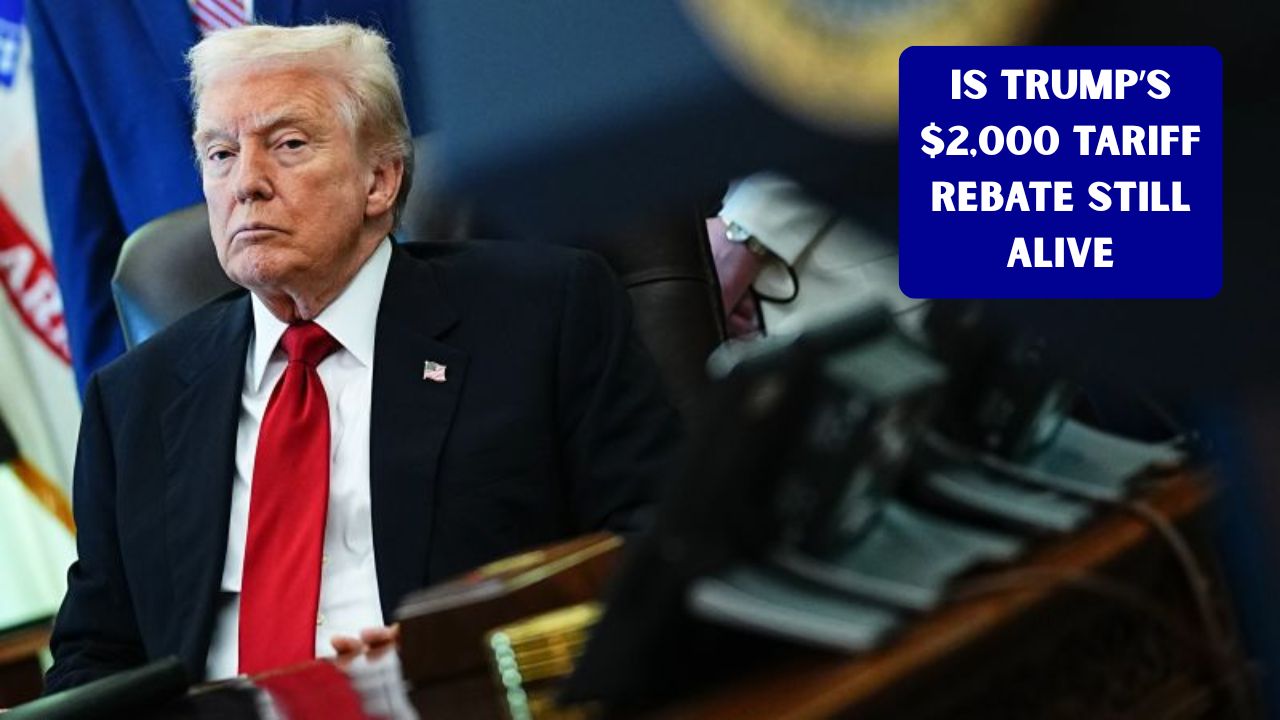
As the calendar turns toward 2026, many Americans are keeping a close watch on one of the most talked-about economic proposals of the second Trump administration: the $2,000 Tariff Rebate. Marketed as a “dividend” for the American people, this plan seeks to take revenue generated from imported goods and put it directly into the pockets of eligible households.
While the rhetoric surrounding these payments remains strong, the path to implementation is filled with legislative hurdles and legal debates. Here is the latest update on where the proposal stands as we approach the new year.
The Current Status of the $2,000 Rebate
As of late 2025, the $2,000 tariff rebate remains a proposal rather than a guaranteed reality. President Trump has repeatedly reaffirmed his commitment to the plan, recently suggesting in a year-end address that the payments could be distributed by mid-2026. The administration frames this as a way to offset the higher costs consumers may face due to aggressive trade policies.
However, White House economic advisers, including Kevin Hassett, have clarified that the executive branch cannot unilaterally send these checks. For the money to move from the Treasury to your bank account, Congress must pass specific legislation authorizing the disbursement.
Potential Eligibility and Income Limits
While the exact details are still being negotiated, the administration has signaled that this will not be a universal payout. Treasury Secretary Scott Bessent and other officials have indicated that the rebate is intended for “working families” and “middle-income” households.
The most frequently discussed threshold for eligibility is an annual income of under $100,000. Those earning above this amount would likely be excluded to ensure the funds reach those most affected by shifting consumer prices. The following table summarizes the projected details based on current administration discussions:
| Feature | Proposed Detail |
| Proposed Amount | $2,000 per eligible individual |
| Primary Funding Source | Tariff revenue from imports |
| Estimated Timeline | Mid-to-late 2026 |
| Income Threshold | Households earning under $100,000 (Targeted) |
| Requirement for Launch | Congressional Approval & Supreme Court Ruling |
The Legislative Battle in Congress
The biggest obstacle to the rebate is the U.S. Congress. Even with a Republican-aligned legislature, the proposal has met with mixed reviews. Some fiscal conservatives argue that any extra revenue generated from tariffs should be used exclusively to pay down the national debt, which currently sits at record levels.
Senator Josh Hawley has introduced similar legislation, such as the American Worker Rebate Act, but it has yet to gain the necessary traction. Without a unified agreement on whether to prioritize debt reduction or direct stimulus, the bill faces a challenging road through the Senate and House of Representatives in early 2026.
The Supreme Court and Legal Uncertainty
Beyond the halls of Congress, the fate of the rebate rests in the hands of the Supreme Court. The Court is currently reviewing the legality of the administration’s sweeping use of emergency powers to impose these tariffs.
If the justices rule that the tariffs are unconstitutional, the revenue stream for the $2,000 checks would effectively vanish. In such a scenario, the government might even be required to refund the collected duties to the original importers, making a dividend for citizens impossible. A ruling is expected in the first half of 2026, which will be the ultimate “make or break” moment for the policy.
Economic Impact: Relief or Inflation?
Economists are divided on the potential impact of a massive cash infusion. Supporters argue that a $2,000 rebate would provide essential relief for families struggling with the “sticky” inflation of the past few years. It serves as a way to return tax money—collected from foreign entities—back to American taxpayers.

Critics, however, warn that “pumping money” into the economy could inadvertently trigger a new wave of inflation. Furthermore, groups like the Tax Foundation note that as tariffs increase, the volume of imports often decreases, which could result in lower-than-expected revenue to fund the program.
Final Outlook for 2026
In summary, the $2,000 tariff rebate is very much “alive” in terms of political intent, but it is currently stalled by legal and legislative requirements. For the checks to arrive by the projected mid-2026 timeline, the administration needs a favorable Supreme Court ruling and a breakthrough in congressional negotiations.
Until a bill is officially signed into law, taxpayers are advised to remain cautious of scams claiming they can “apply” for the money today. No official application exists yet, and any updates will be communicated through the IRS and official Treasury channels.
FAQs
Q1. Do I need to apply for the $2,000 tariff rebate now?
No. There is currently no application or sign-up process. The proposal has not yet become law, and the IRS has not issued any forms for this specific rebate.
Q2. Will everyone get the $2,000 check?
Current discussions suggest the rebate will be targeted at low-to-middle-income individuals and families, with a likely income cap of around $100,000 per year.
Q3. When is the earliest I could receive the money?
President Trump has indicated a target of mid-2026, but this depends entirely on whether Congress passes the necessary legislation in early 2026.
Disclaimer: The content is intended for informational purposes only. You can check the official sources; our aim is to provide accurate information to all users.