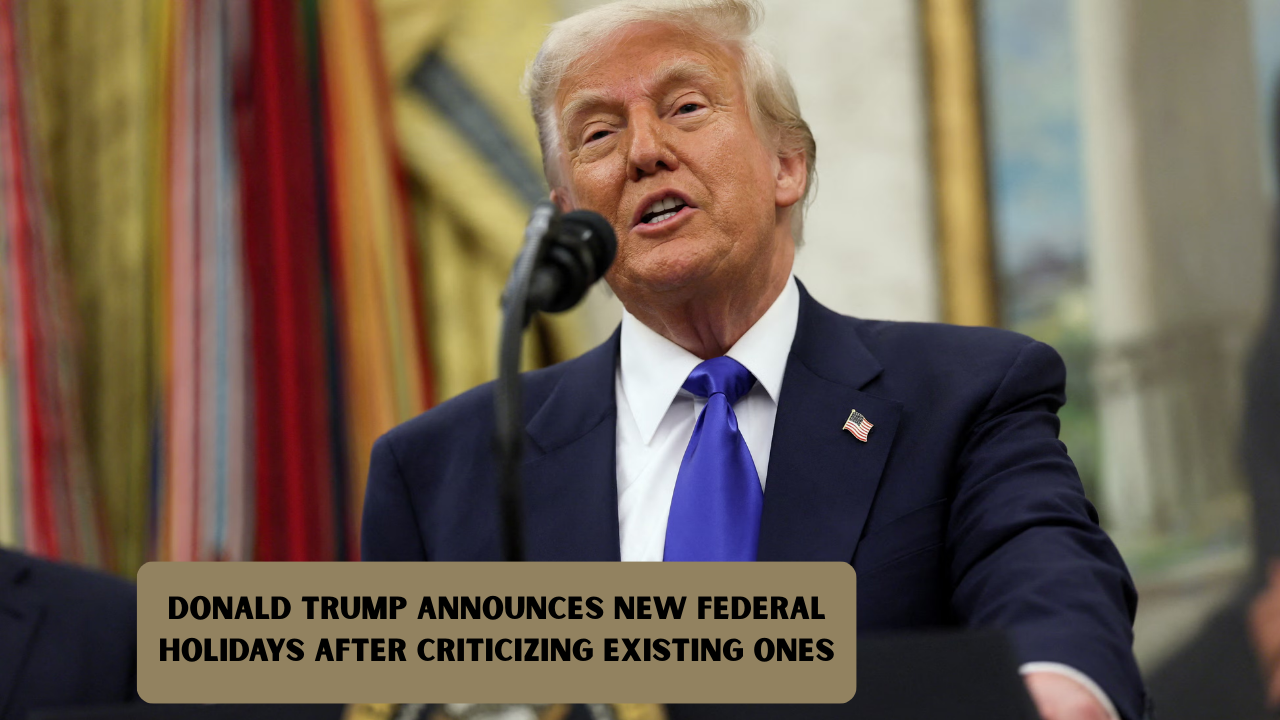
The landscape of American federal holidays is undergoing a notable transformation under the second administration of Donald Trump. Known for his “America First” rhetoric and a sharp focus on economic productivity, Trump has often voiced skepticism regarding the number of federal holidays, suggesting they can be a drain on the national economy.1 However, in a move that surprised both critics and supporters, the President recently signed executive orders that effectively expanded the holiday calendar for 2025.2 By designating Christmas Eve (December 24) and the day following Christmas (December 26) as federal holidays, the administration has created a significant five-day break for many government employees.3 This decision highlights a complex tension between the administration’s drive for government efficiency and its desire to reward a reshaped federal workforce.
Balancing Productivity and Worker Morale
Donald Trump has a long-standing history of criticizing the proliferation of non-working days.4 During the establishment of Juneteenth as a permanent federal holiday in 2021, he expressed concerns about the multi-billion dollar cost to the economy associated with closing federal offices and businesses.5 His philosophy generally leans toward a “work-first” mentality, emphasizing that the United States must remain competitive on the global stage. Yet, the 2025 Christmas order shows a more nuanced approach. By granting these extra days, the administration appears to be offering a “carrot” to federal workers during a year defined by the “stick” of massive restructuring and layoffs led by the Department of Government Efficiency (DOGE). It serves as a symbolic gesture of appreciation for those remaining in the civil service.
The Scope of the 2025 Christmas Executive Order
The executive order signed on December 18, 2025, specifically targets executive branch employees.6 Unlike permanent holidays like Independence Day or Thanksgiving, which are established by Congress, these new additions are temporary.7 They function as a one-time grant of administrative leave rather than a permanent change to the United States Code.8 This distinction is crucial because it allows the President to provide relief to the workforce without permanently altering the statutory schedule or incurring the long-term economic commitments he previously criticized.9 It is an exercise of executive discretion that provides immediate political and morale-boosting benefits without the permanence of legislative action.
Impact on Federal Services and Private Sector
While federal offices are closed, the impact on the daily lives of most Americans remains limited. The “holiday” status for December 24 and 26 applies primarily to government staff, not the private sector.11 Retailers, banks, and grocery stores typically remain open, following their own corporate policies.12 Interestingly, even within the government, the closure is not absolute.13 Essential services—such as national security, law enforcement, and emergency medical services—must remain staffed.14 The following table illustrates the operational status of various sectors during this expanded 2025 holiday window:
| Date | Government Offices | USPS & Mail Delivery | Private Retailers | Banks & Financials |
| Dec 24 (Wed) | Closed (Temporary) | Open (Normal) | Open (Modified Hours) | Open |
| Dec 25 (Thu) | Closed (Permanent) | Closed | Closed | Closed |
| Dec 26 (Fri) | Closed (Temporary) | Open (Normal) | Open (Regular Hours) | Open |
The “Too Many Holidays” Dilemma
The paradox of Trump’s holiday policy lies in his vocal disapproval of the current federal count. He has argued that the U.S. has “too many” holidays, specifically targeting those he views as politically motivated or economically burdensome.15 In his view, every day the federal government shuts down represents a loss in taxpayer-funded productivity. This makes his 2025 Christmas decree particularly interesting. Some analysts suggest that by choosing traditional, family-oriented dates like Christmas Eve, Trump is signaling a preference for “heritage-based” holidays over “socially-driven” ones. It reflects a cultural prioritization where the administration is willing to pause the machinery of government for traditional celebrations while remaining critical of newer additions to the calendar.
Administrative Logic and “DOGE” Influence
The presence of the Department of Government Efficiency (DOGE) looms large over these decisions. Led by figures like Elon Musk earlier in the year, DOGE’s mission was to slash “bloat.”16 Critics argue that shutting down the government for extra days contradicts the goal of maximum efficiency. However, the administration’s logic suggests that a streamlined, smaller workforce can afford such breaks if the underlying systems are modernized. By consolidating roles and eliminating what it deems “redundant” positions, the administration believes the remaining federal apparatus is more nimble.17 In this context, the extra holidays are seen not as a loss of work, but as a “retention bonus” for the high-performing staff that survived the year’s rigorous audits.
Future Outlook for the Federal Calendar
As we look toward 2026 and beyond, the question remains whether these temporary holidays will become a recurring theme of the Trump era. Since permanent changes require a vote in Congress, any future holiday extensions will likely continue to come via the President’s pen on a year-by-year basis. This keeps the workforce in a state of “conditional gratitude,” where extra time off is a reward for performance or a gift from the executive, rather than an entitlement. It also allows the President to maintain his stance against “too many” holidays on the permanent books while still utilizing his power to grant them when it serves his strategic or political interests.

FAQs
1. Are December 24 and 26 now permanent federal holidays?
No. These dates were designated as holidays for 2025 via an executive order and apply only to this year.18 A permanent change would require an act of Congress.
2. Will the Post Office be closed on these new holidays?
The United States Postal Service (USPS) typically maintains regular operations on Christmas Eve and the day after Christmas, despite the executive order for other federal agencies.20 Only Christmas Day (Dec 25) sees a full halt in mail delivery.
3. Do private companies have to give employees these days off?
No. Private employers are not legally required to follow federal holiday schedules.21 While some may choose to close, most retail and service businesses remain open on December 24 and 26.22
disclaimer
The content is intended for informational purposes only. you can check the officially sources our aim is to provide accurate information to all users.