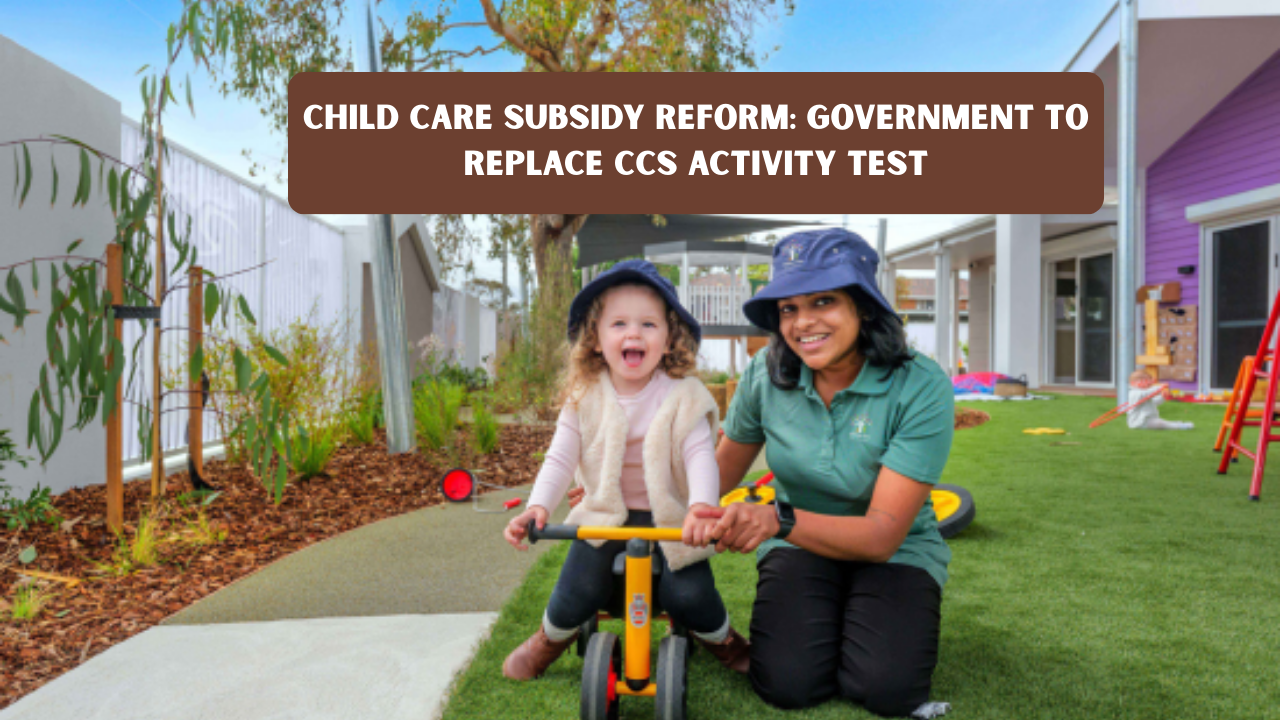
The landscape of Australian early childhood education is undergoing its most significant transformation in years. In a move designed to simplify the system and prioritize child development over parental workforce statistics, the Australian Government is officially replacing the rigorous Child Care Subsidy (CCS) activity test. Starting January 5, 2026, the restrictive hours-based requirements that previously governed a family’s access to subsidized care will be replaced by the “3-Day Guarantee.” This reform marks a pivotal shift toward a universal childcare model, acknowledging that early learning is an essential right for every child, regardless of how many hours their parents spend in “recognized activities” like work or study.
The Shift Toward Universal Access
For years, the activity test acted as a gatekeeper, often penalizing the families who needed support the most. Low-income households, single parents, and those with irregular work hours often found themselves trapped in a cycle where they couldn’t access enough subsidized care to look for work or maintain stable employment. By introducing a baseline entitlement, the government is effectively removing these barriers. Under the new rules, all CCS-eligible families will automatically qualify for at least 72 hours of subsidized care per fortnight. This ensures that every child can access roughly three days of high-quality early learning per week, providing them with the social and cognitive foundations necessary for a successful transition to primary school.
How the 3-Day Guarantee Changes the Rules
The core of this reform is the elimination of the “zero-hour” and “low-hour” traps. Previously, families earning over a certain threshold who did not meet activity requirements could receive zero hours of subsidy. With the new legislation, the 72-hour entitlement becomes the new floor. While families can still access up to 100 hours of subsidized care if they engage in more than 48 hours of recognized activity per fortnight, the stress of tracking every hour of volunteering or casual work just to maintain a basic level of care will largely disappear for the majority of Australians. This change is expected to benefit over 100,000 families across the nation, offering a more predictable and supportive framework for modern parenting.
Significant Support for First Nations Families
A cornerstone of the 2026 reform is the specific focus on Closing the Gap for Aboriginal and Torres Strait Islander children. The government has recognized that First Nations families often face unique systemic hurdles in accessing early education. Consequently, the new policy guarantees these families 100 hours of subsidized care per fortnight for their children, regardless of their activity levels. This is a substantial increase from the previous minimum of 36 hours. By providing maximum access, the reform aims to ensure that First Nations children have the best possible start in life, with consistent access to culturally safe and educational environments during their most formative years.
Understanding the Numbers: Comparison Table
To better understand how these changes will impact your household, it is helpful to look at the transition from the current 2025 settings to the updated 2026 rules.
| Feature | 2025 System (Current) | 2026 System (New Rule) |
| Minimum Subsidized Hours | 0 to 36 hours (activity-dependent) | 72 hours (Guaranteed) |
| First Nations Families | 36 hours minimum | 100 hours (Guaranteed) |
| Maximum Subsidized Hours | 100 hours (requires >48h activity) | 100 hours (requires >48h activity) |
| Reporting Requirements | Must report all activity hours | No reporting needed for up to 72 hours |
| Implementation Date | Ongoing | January 5, 2026 |
Economic and Social Impacts
Beyond the immediate relief for family budgets, the replacement of the activity test is an economic strategy. Experts have long argued that the old test was a “participation tax” on women, who are disproportionately the primary caregivers. By decoupling childcare access from work hours, the government is making it easier for parents to re-enter the workforce, attend interviews, or take on extra shifts without the fear of losing their childcare spots. Estimates suggest that this reform could save the average family approximately $1,370 per year, while significantly boosting national productivity by unlocking thousands of potential workers who were previously sidelined by the high cost of unsubsidised care.
Transitioning to the New System
Families currently receiving the Child Care Subsidy can breathe a sigh of relief: the transition is designed to be seamless. The government has confirmed that for existing recipients, the increase to the 72-hour baseline will occur automatically within the Services Australia system. There is no need for a new application if your circumstances remain the same. However, it is always recommended to ensure your family income estimates are up to date on myGov to avoid any reconciliation issues at the end of the financial year. For new families entering the system after January 2026, a simplified application process will be introduced to reflect the new universal standards.
The Path Forward for Australian Families
The abolition of the CCS activity test in favor of a 3-Day Guarantee is a landmark moment in Australian social policy. It represents a move away from viewing childcare merely as a workforce participation tool and toward viewing it as a critical pillar of the education system. While there are still challenges to address—such as ensuring there are enough physical places and educators to meet the expected increase in demand—this reform provides a solid foundation for a more equitable future. By putting the needs of the child first, Australia is investing in the long-term success of its next generation.

FAQs
1. Does the 3-Day Guarantee mean childcare is now free?
No. The reform changes the number of hours the government will subsidize, but it does not change your subsidy percentage (which is based on income) or the fees charged by your provider. You will still need to pay the “gap fee.”
2. What happens if I still work more than 48 hours a fortnight?
If you currently qualify for 100 hours of subsidized care because of high activity levels, your entitlement will remain at 100 hours. The new law primarily raises the floor for those who were previously getting fewer hours.
3. Do I need to do anything to get the extra hours in 2026?
If you are already registered for CCS, the system will update automatically on January 5, 2026. If you are not currently registered because you didn’t meet the old activity test, you should apply via myGov once the new system goes live.
disclaimer
The content is intended for informational purposes only. you can check the officially sources our aim is to provide accurate information to all users.