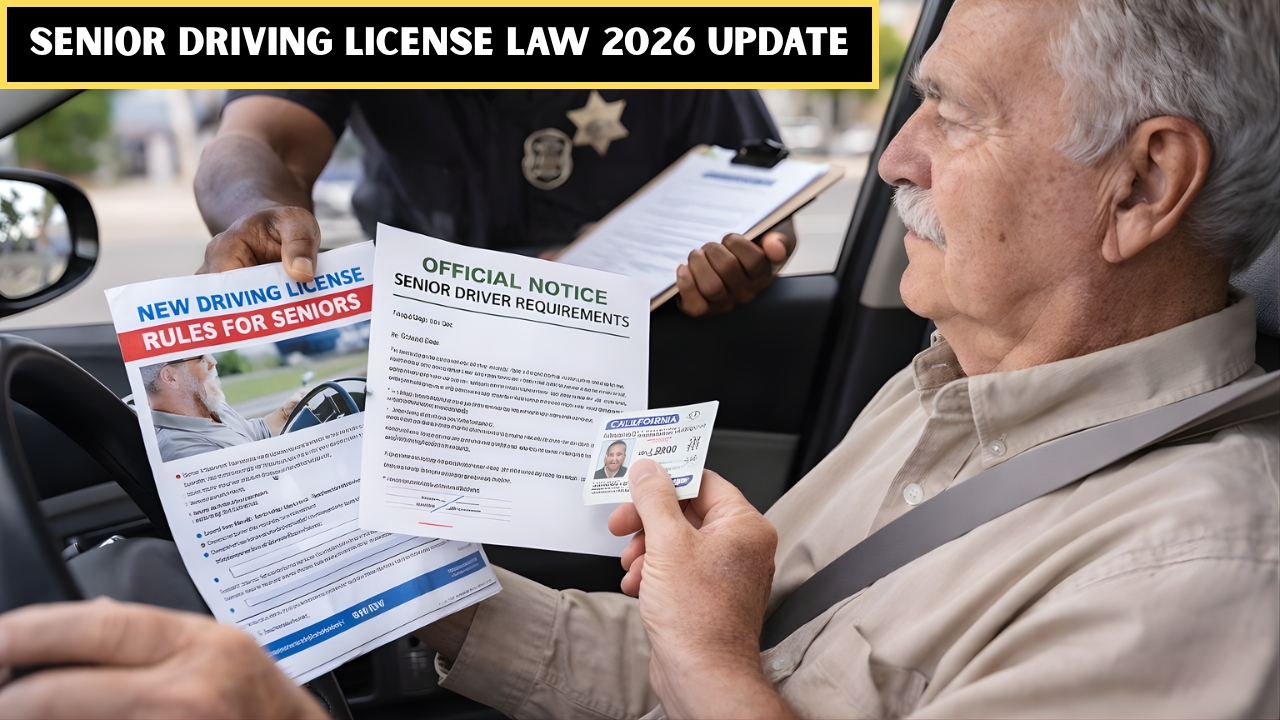
The Senior Driving License Law 2026 brings a historic change in our attitude towards age and mobility. Over the decades, it was believed that when one was in their late 80s then the clock had struck time to be behind the wheel. But new laws are formally adding years to the welcome of 89 years old drivers, emphasizing on competency and not merely on a date of birth. This 2026 revision is a compromise between road safety and the autonomy of our senior citizens, where strict age restrictions are eliminated in favor of new rules and personalized rulings aimed at keeping fit seniors on the streets.
Improved Medical and Cognitive Examination
According to the 2026 recommendations, drivers who are aged 89 and above will be taking part in increased health assessments. The new law pays more attention to cognitive health, such as quick-reaction tests and memory tests as opposed to mere vision tests. These screenings are not meant to fail the seniors, but to determine whether they require some adaptive equipment like panorama mirror or specialized pedals to be able to drive safely. The law can guarantee that an 89-year-old who has outstanding reflexes is able to retain his license as easily as a younger driver since it concentrates on physical and mental fitness.
Reduced Bitcoin Cycles and Security Inspections
The 2026 law will move senior drivers to shorter and more manageable renewal periods to guarantee their continued safety. Rather than the typical five or ten-year contracts, drivers who are over 85 years old will change to a one or two-year renewal. These frequent check-ins will enable the DMV to track alterations of vision or motor skills to a closer degree. Although this would involve additional visits, this offers a safety net where it makes the families and the drivers have a sense that their abilities are still at the level of demands of the current traffic and the intricate crossroads.
Adaptive Driving and Restricted Licenses
The major option in the 2026 revision is the Graduated License to seniors. When a driver who is 89 years old displays a little bit of trouble with his/her eyesight and high-speed traffic, it does not necessarily take away his/her license. They could instead be given a limited permit to drive during the day or within a given distance of where they stay. This Welcome to 89 strategy is recognizing the fact that most seniors do not have to drive their cars to far destinations or at night because they are just doing small town shopping or visiting friends; this will enable them to go on with their lives without exposing themselves to the dangers of driving long distances or at night to their highways.
Professional Assessment and Family Advising
Mature Driver education programs and professional on road assessments have also been incorporated into the new law. The elderly are advised (and in some instances obliged) to enroll in a refresher course to learn new road signs, technology of the new vehicles, and how to cope with the physical changes that come with old age. Such assessments offer a unbiased perspective on the capability of a senior, which in most cases diffuses the tension that exists between older drivers and the family members who are worried about them. The 2026 law gives the ageing population a systematic way to renew the system, eliminating the stigma of ageing and introducing a strategic approach to further mobility.
The Future of Elderly Mobility
The Senior Driving License Law 2026 is a long and technological celebration in the end. The older drivers have the support of driver-assist features such as lane-departure alerts and automatic braking more than ever. This law is cognizant of the fact that regardless of age, age is a mere number as long as the driver is fit and the vehicle is well-equipped. The new rules will allow our most seasoned citizens to still be able to navigate their communities with dignity, safety and full support of the law by ensuring the culture of safe independence is upheld.
Data Overview
| Update Metric | 2026 Requirement |
| Target Age Group | 85 to 89+ Years |
| Renewal Frequency | Every 1–2 Years |
| Assessment Type | Cognitive & Vision |
| Primary Goal | Verified Independence |

Frequently Asked Questions (FAQs)
1. Will the 2026 legislation imply that I will be able to drive to age 90?
Yes, but you must pass the necessary medical, vision and cognitive exams. The legislation shifts the policy to not a blanket age ban, but individual driving skill.
2. And what is to happen in case of failure of the cognitive test?
The failure to pass a test does not necessarily imply that you will never have a license. You can be sent to an expert to get additional examination or you can be given a temporary license to drive local only and daytime.
3. Do they have any charges on these more frequent renewals?
Most jurisdictions have added lower or no charges to senior renewal to make certain that the more frequent “check-in” procedure does not result in a financial load.
Disclaimer
The information is informative in nature. To meet the official requirements and deadlines, refer to the DHS.gov, NHTSA.gov or your local DMV sites.