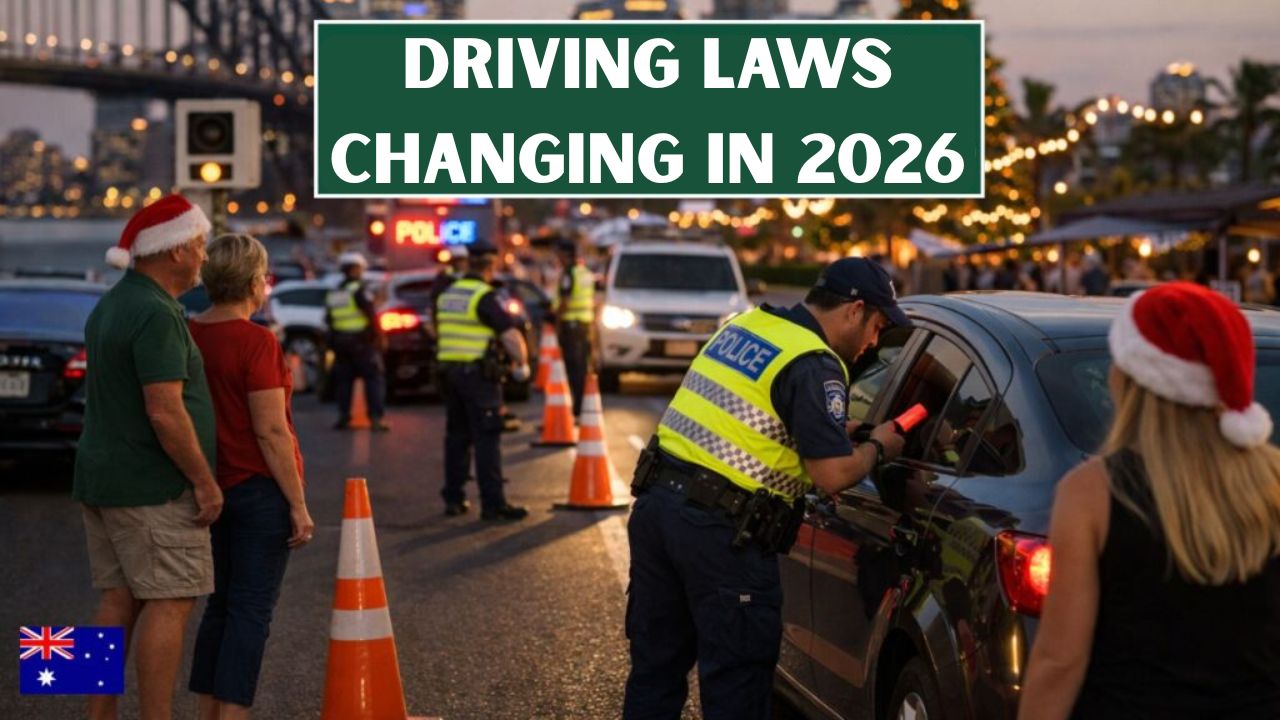
As we move into 2026, Australian motorists are facing one of the most significant overhauls of road transport regulations in a decade. These changes are not merely incremental; they represent a fundamental shift toward “Vision Zero”—a national strategy aimed at eliminating road fatalities by 2050. From AI-driven enforcement technology to stricter licensing for both the youngest and oldest drivers, the landscape of Australian driving is becoming more regulated and technologically advanced. For the average driver, staying informed is no longer optional, as the cost of ignorance can now range from heavy financial penalties to the immediate loss of a license.
AI Surveillance and the Rise of Smart Enforcement
The most visible change in 2026 is the nationwide expansion of AI-powered camera networks. While mobile phone detection cameras were the first step, the latest generation of technology now monitors seatbelt compliance and even “distracted driving” behaviors like eating or grooming. In jurisdictions like the ACT and New South Wales, these cameras are now fully operational 24/7. These systems use high-definition imaging to peer through windscreens, even at night or in heavy rain, automatically flagging drivers who have a seatbelt tucked under an arm or a phone resting on their lap. The margin for error has effectively disappeared, as these systems provide digital evidence that is difficult to dispute.
Protective Gear and Novice Rider Mandates
Motorcyclists are seeing a targeted shift in safety requirements, particularly those under the Motorcycle Graduated Licensing Scheme (MGLS). By mid-2026, several states, led by New South Wales, will move toward mandating specific protective equipment beyond the standard helmet. Novice riders—those on Learner or Provisional licenses—will likely be required to wear approved protective gloves and high-visibility vests. This move follows data suggesting that minor spills often result in life-changing hand injuries for unequipped riders. The goal is to normalize safety gear as a non-negotiable part of the “uniform” for the most vulnerable road users.
The 30 km/h Urban Revolution
Perhaps the most controversial change is the “30 km/h movement” gaining momentum in high-pedestrian urban zones. While 40 km/h has long been the standard for school zones, the National Road Safety Strategy for 2026 includes provisions for local councils to drop limits to 30 km/h in CBDs and residential “active travel” streets. Proponents argue that the survival rate for a pedestrian hit at 30 km/h is significantly higher than at 40 km/h. Motorists should keep a sharp eye on signage in 2026, as many traditional 50 km/h suburban “collector” roads are being re-zoned to reflect these new safety standards.
Summary of Key Penalty and Rule Changes
To help you navigate these updates, the following table outlines the expected shifts in penalties and standards across the country.
| Rule Category | Previous Standard | 2026 New Regulation | Penalty Range (Approx.) |
| Mobile Phone Use | Visual detection | AI-automated detection | $500 – $1,200 + 5 points |
| Urban Speeding | 40 km/h (School Zones) | 30 km/h (High Pedestrian) | $200 – $800 |
| Older Drivers | Self-assessment (some states) | Mandatory Medicals (75+) | License Suspension |
| Vehicle Safety | Basic AEB (Standard) | Pedestrian-Detection AEB | Registration Refusal (New) |
| Novice Riders | Helmet only mandatory | Mandatory Gloves & Hi-Vis | $300 + 2 points |
Stricter Licensing for Older and Younger Drivers
Age-based licensing is undergoing a national harmonization in 2026. For older motorists, the “National Framework for Older Driver Licensing” is finally being adopted in Western Australia and the Northern Territory, completing the country’s transition. Drivers aged 75 and over will now face mandatory medical checks, which escalate to annual reviews once they reach 80. Simultaneously, younger drivers face tougher “competency-based” assessments. If a P-plater has their license cancelled in 2026, they may be required to complete advanced safety modules before their privileges are reinstated, moving away from the old system of simply waiting out the suspension period.
New Vehicle Safety Standards (ADR 98/01)
The cars we drive are also changing by law. From 2026, the Australian Design Rules (ADRs) will mandate that all new vehicles sold in Australia must be equipped with advanced Autonomous Emergency Braking (AEB) that includes pedestrian and cyclist detection. This has already led to the discontinuation of several popular older models that could not be retrofitted with the necessary sensors. Furthermore, ANCAP (the safety rating body) is now requiring car manufacturers to include physical buttons for critical functions—like wipers and lights—rather than hiding them in touchscreen menus, citing driver distraction as a major safety risk.
A Focus on Roadside Worker Safety
Finally, the “Slow Down, Move Over” laws have been expanded. Previously, drivers only had to slow to 40 km/h for emergency vehicles with flashing lights (Police, Fire, Ambulance). In 2026, this rule applies across all states to include roadside assistance vehicles (like the RACV or NRMA) and tow trucks. This change is designed to protect workers who are often just inches away from high-speed traffic. Failing to slow down when passing a yellow flashing light is now treated with the same severity as speeding through a construction site, often carrying heavy demerit point penalties.

FAQs
Q1. Do the new AI cameras only detect mobile phone use?
No. In 2026, the upgraded camera networks are also used to detect seatbelt offences (including belts worn incorrectly) and can even flag general distracted driving, such as having a pet on your lap.
Q2. Is the 30 km/h speed limit mandatory everywhere?
No, it is not a blanket rule. It is being implemented selectively by local councils in high-activity areas like cafe strips, school zones, and busy CBD intersections to protect pedestrians.
Q3. What happens if an older driver fails a medical check?
A failed medical doesn’t always mean a total loss of license. Authorities may issue a “conditional license,” which allows driving only during daylight hours or within a specific radius of the driver’s home.
Disclaimer
The content is intended for informational purposes only. You should check official state transport websites (such as Transport for NSW or VicRoads) for the most current and localized legal requirements, as our aim is to provide accurate general information to all users.