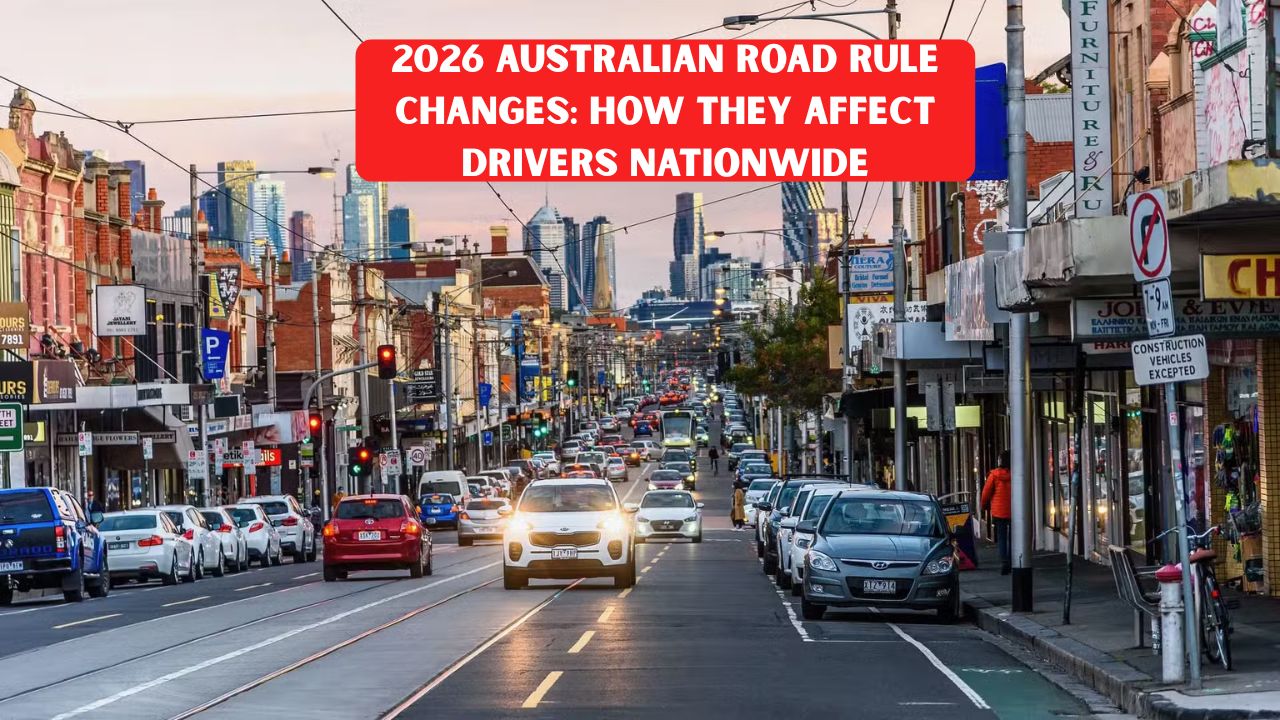
As we transition into 2026, motorists across Australia are facing a comprehensive overhaul of road regulations designed to curb the rising national road toll. These updates represent one of the most significant shifts in traffic law in recent years, moving toward high-tech enforcement and stricter safety mandates. From new speed limit standards in urban zones to tightened licensing requirements for vulnerable road users, every driver from Perth to Sydney will feel the impact of these changes.
A Nationwide Push for Lower Urban Speed Limits
One of the most noticeable shifts in 2026 is the further reduction of speed limits in high-pedestrian and school zones. Following successful trials in 2025, several states, including Queensland and New South Wales, are moving toward a default 30 km/h limit in busy activity centers. Local councils now have more flexibility to implement these “slow zones” to protect vulnerable road users. In South Australia, the expansion of 40 km/h time-based limits on major arterial roads near schools is expected to be fully completed by the end of the year, ensuring a consistent safety blanket for students nationwide.
Stricter Licensing for Novice Riders and Older Drivers
Licensing frameworks are becoming more rigorous in 2026 to address specific risk groups. Novice motorcycle riders, particularly those on learner and provisional licenses, now face a major overhaul of the Motorcycle Graduated Licensing Scheme (MGLS). This includes mandatory requirements for protective gear, such as high-visibility vests and specialized gloves, making safety equipment as legally essential as a helmet. On the other end of the spectrum, the National Medical Framework for older drivers is now fully integrated. Drivers aged 75 and over across all states, including Western Australia and the Northern Territory, must now undergo frequent, non-automatic medical assessments to maintain their driving privileges.
Summary of Key 2026 Road Rule Adjustments
To help you navigate these changes, the following table summarizes the primary shifts occurring across the country.
| Regulation Area | Key Change for 2026 | Impacted Group |
| Urban Speed Limits | Reduction to 30 km/h in high-traffic CBD zones | All Urban Drivers |
| School Zones | Extension of 40 km/h zones to all arterial school roads | All Motorists |
| Motorcycle Safety | Mandatory hi-vis vests and gloves for L & P riders | Novice Riders |
| Older Drivers | Mandatory annual medical checks (Age 75-80+) | Senior Drivers |
| Heavy Vehicles | Introduction of 20-meter prescriptive length limit | Truck Operators |
| Fine Enforcement | New regulations for payment and escalation of penalties | Fine Defaulters |
AI-Powered Enforcement and Seatbelt Technology
The “eye in the sky” is becoming more sophisticated in 2026. Building on the rollout in the ACT and New South Wales, AI-powered camera networks are now operating at full capacity nationwide to detect seatbelt offenses. These cameras can peer through windscreens to identify if a belt is being worn incorrectly—such as under the arm—or if a passenger is unrestrained. Unlike traditional speed cameras, these systems operate 24/7 in all weather conditions, and the fines associated with these detections have seen a significant inflationary increase to act as a stronger deterrent.
Heavy Vehicle National Law (HVNL) Reform
The transport and logistics sector is seeing its biggest legislative change in a decade with the commencement of the updated Heavy Vehicle National Law in mid-2026. The new “2025 Amendment Package” officially increases the prescriptive length for certain combinations from 19 meters to 20 meters, aiming to improve productivity. However, this comes with a “positive duty” requirement, meaning anyone in the “Chain of Responsibility”—from loaders to company directors—can be held legally liable if their business practices contribute to a driver speeding or driving while fatigued.
National Consistency in Roadside Assistance Rules
A crucial safety change that was phased in during 2025 has reached full nationwide compliance in 2026: the “Slow Down, Move Over” rule. Drivers are now legally required to drop their speed to 40 km/h when passing stationary roadside assistance vehicles (such as RACV, NRMA, or RACQ vans) with flashing lights. This brings breakdown assistance workers under the same legal protection previously reserved for emergency services and tow trucks. Failing to slow down not only carries a heavy fine but also significant demerit point penalties in most jurisdictions.
Navigating the New Penalty Landscapes
Fines and demerit points have been recalibrated for 2026. In Victoria, the Fines Reform Regulations 2026 have changed the way fine defaulters are handled, making the escalation process from an initial ticket to a court summons much faster. Meanwhile, New South Wales has moved to make its “Demerit Point Reward” program permanent. This allows safe drivers who remain offense-free for a set period to have a demerit point removed from their record, providing a positive incentive to balance the stricter enforcement measures.

FAQs
Q1. Is the 30 km/h speed limit applicable everywhere?
No, the 30 km/h limit is primarily targeted at high-pedestrian activity areas, school zones, and specific CBD streets. Standard residential limits generally remain at 50 km/h unless otherwise signposted.
Q2. What happens if I miss my medical check as an older driver?
Under the 2026 national framework, failure to complete the mandatory medical assessment by your birthday (or the specified deadline) will result in an automatic suspension of your license until the medical clearance is processed.
Q3. Do the new motorcycle gear rules apply to full-license holders?
The 2026 MGLS reforms specifically target learner and provisional riders. While highly recommended for all, the mandatory requirement for gloves and hi-vis vests is currently restricted to those still within the graduated licensing stages.
Disclaimer
The content is intended for informational purposes only. you can check the officially sources our aim is to provide accurate information to all users