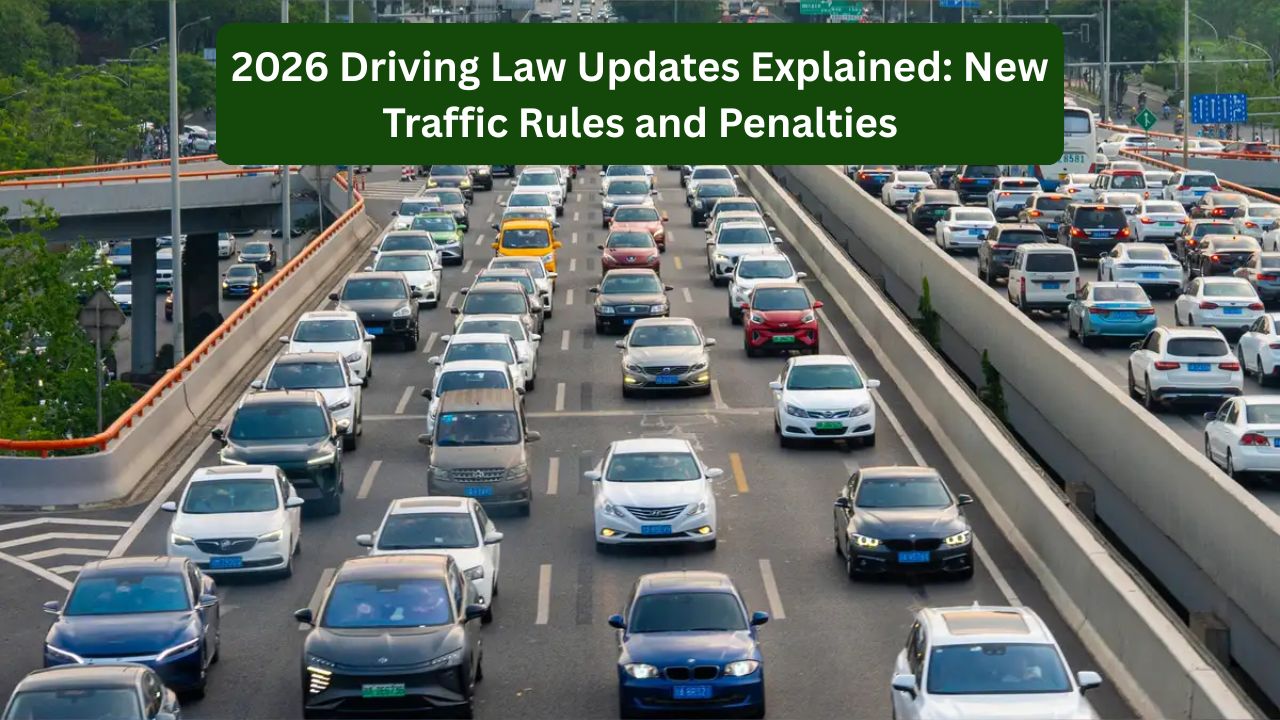
The year 2026 marks a significant turning point in global road safety and traffic management. Governments worldwide are shifting from traditional enforcement toward highly integrated, technology-driven systems designed to reach “Vision Zero”—the ambitious goal of eliminating all road fatalities. These updates are not merely minor adjustments; they represent a fundamental overhaul of how driver competency is measured and how violations are punished. From the introduction of autonomous vehicle frameworks to the deployment of AI-powered surveillance, motorists must stay informed to avoid heavy fines and potential license revocations.
Stricter Licensing and Mandatory Health Checks
One of the most notable shifts in 2026 is the focus on aging populations and novice drivers. In the United Kingdom and across several U.S. states, new regulations mandate more frequent and rigorous health screenings for drivers over the age of 70. These are no longer simple self-assessments; they often include mandatory eye tests conducted by certified opticians and, in some jurisdictions, reaction-time screenings. For younger drivers, the “probationary period” is becoming a standard. In the European Union, a mandatory two-year probation for new license holders means that even minor infractions, like failing to wear a seatbelt, could lead to an immediate suspension rather than just a fine.
The Rise of AI Enforcement and Surveillance
The “human element” of traffic policing is rapidly being supplemented by Artificial Intelligence. By 2026, many major cities in Australia, Canada, and the UK will have fully operational AI camera networks. Unlike traditional speed cameras, these systems use high-definition sensors to detect distracted driving behaviors, such as holding a mobile phone or even eating behind the wheel. They can also identify if a seatbelt is being worn incorrectly (e.g., tucked under the arm). These violations are processed automatically, with fines and demerit points issued via mail or digital portals, leaving little room for dispute.
Summary of Key 2026 Penalty Increases
| Offence Type | Typical Fine (2026 Est.) | Demerit/Penalty Points | Additional Consequences |
| Mobile Phone Use | £200 / $500 – $1,000 | 6 Points | Potential 3-month ban for repeats |
| Extreme Speeding | Up to €3,382 / $1,500 | 10 – 15 Points | Immediate vehicle impoundment |
| Seatbelt Violation | £180 – £500 | 3 Points | Mandatory safety course |
| Red Light Running | €320 / $400 | 4 – 15 Points | Higher insurance premiums |
Urban Speed Limit Revolutions
The “30 km/h Movement” is gaining massive traction in 2026. Urban centers are increasingly lowering speed limits from 40 km/h (25 mph) to 30 km/h (approx. 20 mph) in high-pedestrian areas, such as school zones and central business districts. Data suggests that the survival rate of a pedestrian in a collision increases significantly at these lower speeds. Motorists should be extra vigilant, as these “active travel” zones are often enforced by the aforementioned AI cameras. In some regions, failing to slow down for roadside assistance vehicles—like tow trucks or highway maintenance crews—now carries the same weight as speeding through a construction zone.
Autonomous Vehicles and Shared Responsibility
2026 is the year that fully autonomous commercial vehicles (Level 4 and Level 5) are expected to hit public highways in a sustained capacity, particularly in the United States and the UK. New laws, such as the Automated Vehicles Act, establish a clear “responsibility framework.” If a vehicle is in self-driving mode and commits a traffic violation, the manufacturer or the authorized “operator” may be held liable rather than the human occupant. However, this also introduces new “AV Noncompliance” notices, where law enforcement can flag vehicles that fail to yield correctly to first responders.
Environmental Levies and Tax Changes
Driving a vehicle is becoming more expensive through environmental taxation. Many regions are ending the “fuel duty freeze,” leading to annual price hikes aligned with inflation. Additionally, electric vehicle (EV) owners will face new challenges as the “expensive car supplement” and Benefit-in-Kind (BiK) tax rates increase. In London and other European capitals, the exemption for EVs in congestion zones is beginning to phase out, meaning even zero-emission drivers will need to pay for access to the city center. This shift ensures that all road users contribute to infrastructure maintenance, regardless of their engine type.
Modernizing the Theory and Practical Tests
The path to obtaining a license is also evolving. Starting in early 2026, the driving theory test will include mandatory questions on life-saving skills, such as CPR and the use of Automated External Defibrillators (AEDs). The goal is to turn every motorist into a potential first responder during the “golden hour” following a crash. Furthermore, to combat the backlog of driving tests, new booking systems will only allow learner drivers to book their own tests, effectively banning third-party “test-selling” bots and ensuring a fairer distribution of available slots.

FAQs
Q1. Will I need to retake my driving test if I am over 70?
Not necessarily. Most new laws focus on medical screenings and vision tests rather than a full practical re-test. However, if a doctor or family member flags safety concerns, a re-evaluation may be mandated.
Q2. Can AI cameras really see inside my car to check my seatbelt?
Yes. Modern AI enforcement cameras use infrared technology and high-shutter speeds to see through windscreens in all lighting conditions, accurately detecting if a seatbelt is fastened correctly.
Q3. Do these rules apply to electric scooters and e-bikes?
Yes, many 2026 updates include specific classifications for “eMotos” and high-powered e-bikes, requiring them to follow the same registration, helmet, and lighting laws as traditional motorcycles.
Disclaimer
The content is intended for informational purposes only. you can check the officially sources our aim is to provide accurate information to all users