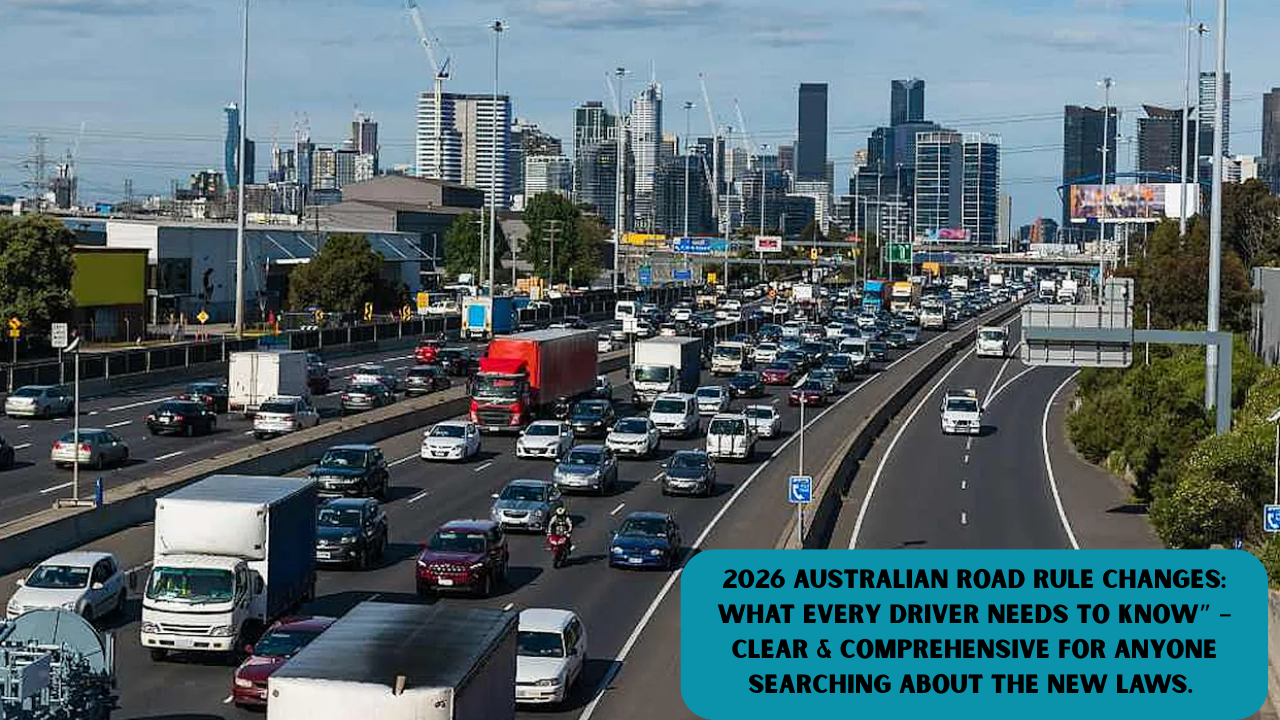
As we approach 2026, the Australian transport landscape is undergoing one of its most significant transformations in decades. State and territory governments, guided by the National Transport Commission, are rolling out a fresh suite of regulations aimed at curbing the national road toll and integrating new technologies. For the everyday motorist, these changes mean more than just updated signage; they represent a fundamental shift in how we share the road, how we are monitored, and how we maintain our eligibility to drive. Staying informed is no longer optional, as the 2026 updates carry heavier penalties and introduce advanced enforcement methods that leave little room for error.
Stricter Licensing for Older Drivers and Novice Riders
One of the most impactful changes set for full nationwide integration by early 2026 involves stricter licensing requirements for specific age groups and vehicle types.2 Following a gradual rollout in the eastern states, Western Australia and the Northern Territory are expected to complete the adoption of a national framework for older drivers.3 This means motorists aged 75 and over will face mandatory medical assessments, with annual health checks becoming a requirement from age 80 to ensure road safety.4 Simultaneously, New South Wales is overhauling the Motorcycle Graduated Licensing Scheme. Expected by mid-2026, this reform will mandate that novice riders wear high-visibility vests and protective gloves, elevating safety gear to the same legal status as helmets.
The Rise of 30km/h Urban Speed Zones
In a bid to protect vulnerable road users, 2026 will see a significant expansion of “low-speed” environments across major cities.6 Queensland and New South Wales are leading the charge by reviewing and potentially lowering school zone and high-pedestrian area limits from 40km/h down to 30km/h.7 This change aligns with global “Safe Systems” recommendations which suggest that a pedestrian’s survival rate increases dramatically when vehicle speeds are kept at or below 30km/h. Drivers should prepare for more 40km/h time-based limits on busy arterial roads in South Australia as well, with the government aiming for full coverage of identified school-adjacent routes by the end of the year.
AI Enforcement and Seatbelt Compliance
The era of the “smart” road is fully arriving in 2026. Following successful trials, AI-powered traffic cameras are becoming a permanent fixture across the country. These systems do not just monitor speed; they use high-resolution sensors and machine learning to detect drivers and passengers who are not wearing seatbelts or are wearing them incorrectly.9 The Australian Capital Territory and several other jurisdictions have already integrated this technology to issue automatic fines. These cameras are also being calibrated to detect mobile phone distractions even at high speeds, making it virtually impossible to use a handheld device without being caught by the system’s “always-on” eyes.
Updated Penalties and Regulatory Frameworks
The financial consequences of breaking the law are also being recalibrated. From July 1, 2026, new Fines Reform Regulations in Victoria and similar structures elsewhere will change how penalties are enforced and how quickly they escalate.10 This overhaul is designed to ensure that fine defaulters face swifter consequences, while also providing clearer payment frameworks.11 Additionally, for the heavy vehicle sector, the National Heavy Vehicle Driver Competency Framework will begin its rollout in July 2026.12 This introduces competency-based assessments for drivers whose licenses have been cancelled or refused, ensuring that high-risk operators prove their skills before returning to the road.
Comparison of Key 2026 Road Rule Updates
| Change Category | Target Demographic | Expected Implementation |
| Elderly Licensing | Drivers aged 75-80+ | Early 2026 (WA/NT completion) |
| Urban Speed Limits | All Drivers | 30km/h zones rollout throughout 2026 |
| Motorcycle Gear | Novice Riders (NSW) | Mid-2026 |
| AI Cameras | All Road Users | National expansion by late 2026 |
| Heavy Vehicles | Truck & Bus Operators | July 2026 (New Competency Framework) |
Automated Vehicle Safety Laws
Looking toward the future, 2026 marks the target year for the “Automated Safety Law.” The Federal Government is working to establish a consistent national regulatory framework for vehicles with automated driving systems (ADS).14 While fully autonomous cars may not be flooding the suburbs just yet, the legislation will define the legal responsibilities of “drivers” when a vehicle is in self-driving mode. This includes clarity on liability in the event of a collision and the data privacy rights of vehicle owners. These laws are essential for the safe introduction of Level 3 autonomous vehicles, which are expected to enter the Australian market in small numbers starting this year.
Preparing for the 2026 Transition
Adapting to these changes requires a proactive approach to road safety. Drivers are encouraged to check their local Department of Transport websites regularly, as specific implementation dates can vary slightly by state. Whether it is adjusting to a 30km/h crawl in a busy CBD or ensuring an elderly relative is prepared for their medical check, understanding the “why” behind these rules—primarily the goal of zero fatalities by 2050—can make the transition easier. As enforcement becomes more automated and speed limits become more restrictive, the best defense against heavy fines and demerit points remains a thorough knowledge of the current Australian Road Rules.

FAQs
Q1: Are the 30km/h speed limits mandatory everywhere?
No, these limits are being introduced strategically in “high-pedestrian” zones, such as school areas and busy shopping strips.15 They do not apply to standard residential streets unless specifically signposted.
Q2: What happens if I fail a mandatory medical check for my license?
If a medical professional deems a driver unfit, the license may be suspended or downgraded to include conditions (such as only driving during daylight hours or within a certain radius of home) rather than being cancelled entirely.
Q3: Can AI cameras see through tinted windows?
Yes, modern AI enforcement cameras use specialized infrared technology and high-angle positioning to see through most legal window tints to verify seatbelt use and mobile phone placement.
disclaimer
The content is intended for informational purposes only. you can check the officially sources our aim is to provide accurate information to all users.